If you want you to stand out from the crowd, brand positioning is crucial.
Your target audience needs to know who you are, how you can help them, and what makes you different from all the competitors out there.
Get your brand position right, and you’ll have a big edge on the competition. Get it wrong, and you’ll be waving your arms and jumping up and down, waiting for someone, anyone, to notice you.
In this post, I’m going to show you seven brands that got it right (and what you can learn from them).
But first, let’s answer the obvious question…
What is Brand Positioning?
Brand positioning is the process of taking up residence inside the mind of your audience.
The idea was popularized by Al Ries and Jack Trout in their book Positioning: The Battle for Your Mind.
According to Ries and Trout:
“Positioning starts with a product. A piece of merchandise, a service, a company, an institution, or even a person. Perhaps yourself.
But positioning is not what you do to a product. Positioning is what you do to the mind of the prospect. That is, you position the product in the mind of the prospect.”
So, how exactly do you go about positioning your brand in the minds of your prospects?
Let’s look at some popular brands and see what they did to rise above the crowd.
7 Effective Branding Examples That’ll Inspire You
1. Apple

For ten straight years, Apple has topped Forbes’ annual list of the world’s most popular brands.
What’s the company’s secret?
Is it the clean design and minimalist aesthetic? The attention to details? The innovations? The perceived exclusivity of their products?
All of these certainly play a role in Apple’s success, but they’re secondary to this:
Apple owners feel an emotional connection with their products.
Don’t believe me?
Ask an iPhone owner why they didn’t buy an Android phone. Tell a Mac user they should try Windows. Heck, walk up to someone with Apple AirPods and ask, “what are those things sticking out of your ears?”
Apple’s customers are often lifetime customers, and it’s not (only) because they’re trapped in the ecosystem. It’s because they love Apple.
Takeaway: Make people self-identify with your brand. When they see you, they should think, “Yes, this is me!”
2. Coca-Cola

If it feels as though Coca-Cola has been around forever, there’s a reason: incorporated in the late 18th century, Coca-Cola has been around your entire life. (Yes, even you, Kane Tanaka — aka The World’s Oldest Living Person.)
Coca-Cola, like Ms. Tanaka, is timeless.
Their logo, recognized all over the world, has been in place since 1923. The distinct red color was introduced in 1948. And the recipe — the “New Coke” fiasco aside — has remained relatively unchanged since 1903.
In other words, Coca-Cola sticks with what works.
Takeaway: Don’t mess with a good thing. Tweaks, testing your ideas, and experiments are all fine, but avoid overhauling your brand or your message unless there’s a really good reason to do so.
3. Nike

For decades now, the world’s most famous athletes have starred in ads for Nike. With the company’s iconic “Just Do It” tagline etched in customers’ minds, Nike has become synonymous with all things sports.
It’s a competitive advantage that’s allowed Nike to sell not just shoes and apparel, but the tools you need to climb mountains.
Want to jump like Michael Jordan? Run like Bo Jackson? Hit a backhand like Maria Sharapova? (And look cool while doing so?)
Well, any ol’ athletic gear won’t do. You need Nike. Only Nike.
Just like Michael, Bo, and Maria.
Takeaway: Position your brand as a conduit for achieving resolutions and goals. It isn’t easy, but if you can pull it off, as Nike has done, you’ll be golden.
4. Disney

There aren’t many brand names as well known around the world as Disney.
Disney has its hands in a lot of different areas, but at their core, there’s one common element to all of them: stories.
Geoffroy de La Bourdonnaye, a former senior executive at Disney, once shared:
“We’ve all known the power of attracting emotions through strong storytelling, and that’s what makes Disney so unique. At Disney, it’s about the power of narrative and being able to create a world with a theme and characters, to draw emotions that are common to all people around the world.”
From theme parks to movies, Disney tells stories. They captivate kids (and kids at heart) with storytelling — pulling them out of their world and into theirs.
Takeaway: Stories are powerful. Want to position your brand so that it stands out from the crowd? Don’t be afraid to tell your story.
5. Tesla

Famous for its innovations in the automotive industry, as well as the fact it spends no money whatsoever on advertising, Tesla has become one of the most popular brands in the world.
And it all started with a simple vision statement.
Two years before his first car was even in production, CEO Elon Musk published The Secret Tesla Motors Master Plan (just between you and me) on Tesla’s blog.
It outlined Musk’s lofty goals for the company. People saw it, liked it, and joined the tribe.
Takeaway: Want to attract your tribe? Tell people what your brand stands for. Shout your vision from the rooftops.
6. Dollar Shave Club

In 2012, Dollar Shave Club’s founder, Michael Dubin, published a YouTube video for his new business.
The video went viral. Within two days, his startup had thousands of orders. A few short years later, Unilever paid Dubin a whopping $1 billion for his company.
And here’s the really crazy part:
Dollar Shave Club didn’t even manufacture its own razors.
Dubin went from zero to $1 billion by having a great idea and a killer brand positioning strategy: he offered cheap razors to men who were tired of paying too much money, and he delivered the razors straight to their door.
Takeaway: As Michael Dubin did, find the pain point in your target market. Cast your brand as the protagonist in a hero’s journey — the knight who will slay the dragon (and make the pain go away).
7. McDonald’s

“Billions and billions served.” It’s one of the many taglines and slogans used by McDonald’s, and its message is clear:
“You’ve eaten here. Everyone you know has eaten here. And you all will eat here again one day, probably very soon.”
But it almost wasn’t this way.
After World War II, the McDonald brothers realized they needed to make a change. Their profits had flatlined, and what they had been doing (offering dozens of different items on their menu) made them virtually indistinguishable from their competitors.
So, they pivoted.
In 1948, the McDonald brothers streamlined their menu. This leaner model allowed the restaurant to lower their prices and focus on faster service — a huge differentiation that none of their competitors offered at the time.
Fast forward several decades and someone you know is eating a Big Mac at this very moment.
Takeaway: Never stop looking for ways to differentiate your brand. Even small changes can have a big impact.
Which Brand Positioning Example is Your Favorite?
Let me know in a comment below!
And while you’re there, tell me about your personal brand’s positioning. Who are you? How do you help your audience? What separates you from your competitors?
In other words…
What are you doing to rise above the noise?
Want content like this PLUS my value-packed videos and tutorials delivered straight to your inbox? Join over 50,000 entrepreneurs & get my best tips & trainings each week. Sign Up HERE.
Before you go…
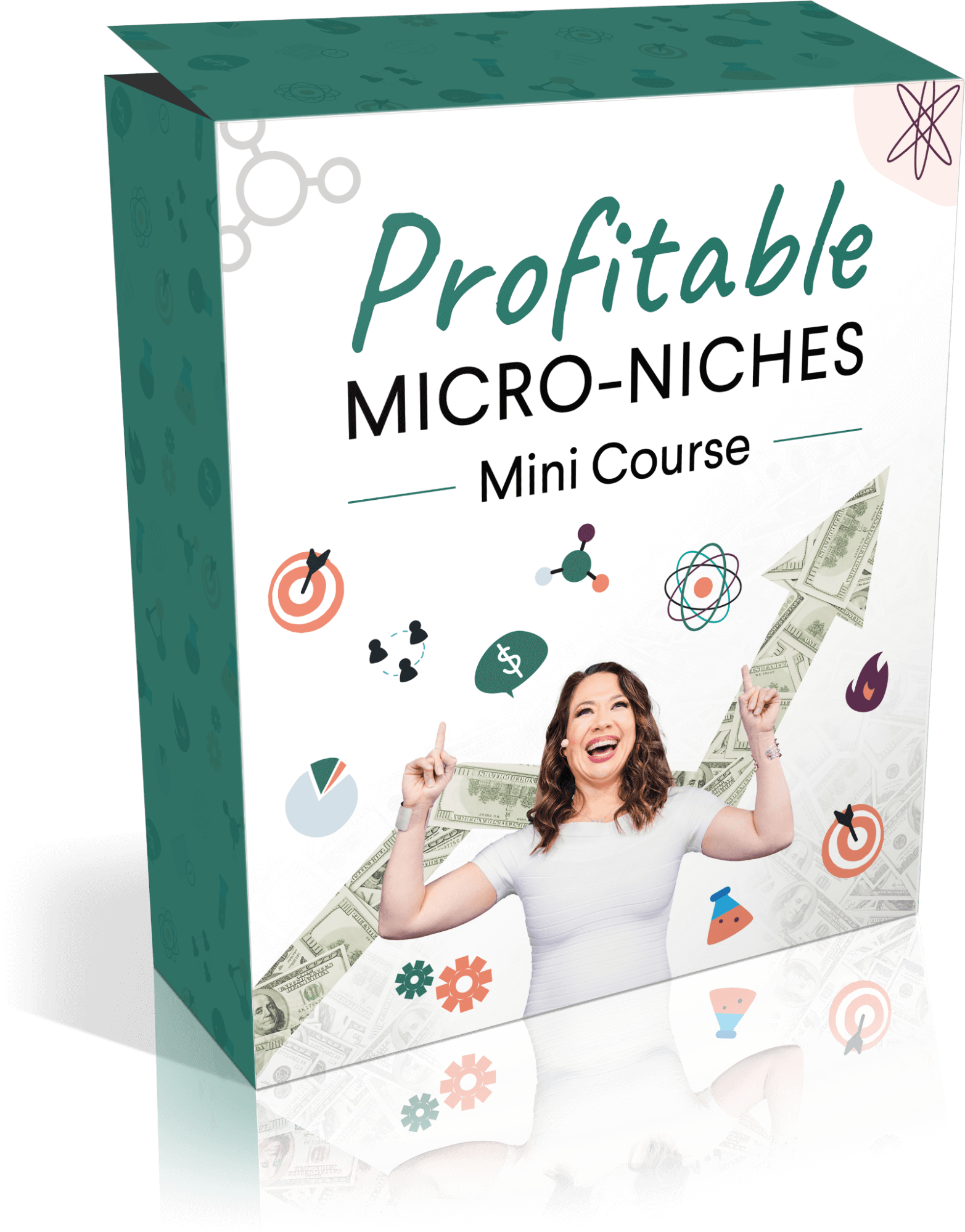
Turn your expertise into income FASTER! Take my $9 Profitable Micro-Niches Mini-Course!
You know the riches are in the niches…
But most people’s niches are too broad — they’re missing that critical Market Fit.
And that’s exactly what your Micro-Niche is all about…
Defining exactly what you do AND exactly who you serve in such a specific, compelling way leaves your Perfect Customers no choice but to lean in and say… how can I get what you’ve got?!
I’ll show you how to find yours in my $9 Mini-Course!