
On the heels of a 5-week vacation in Italy, my dad dropped in for a surprise visit.
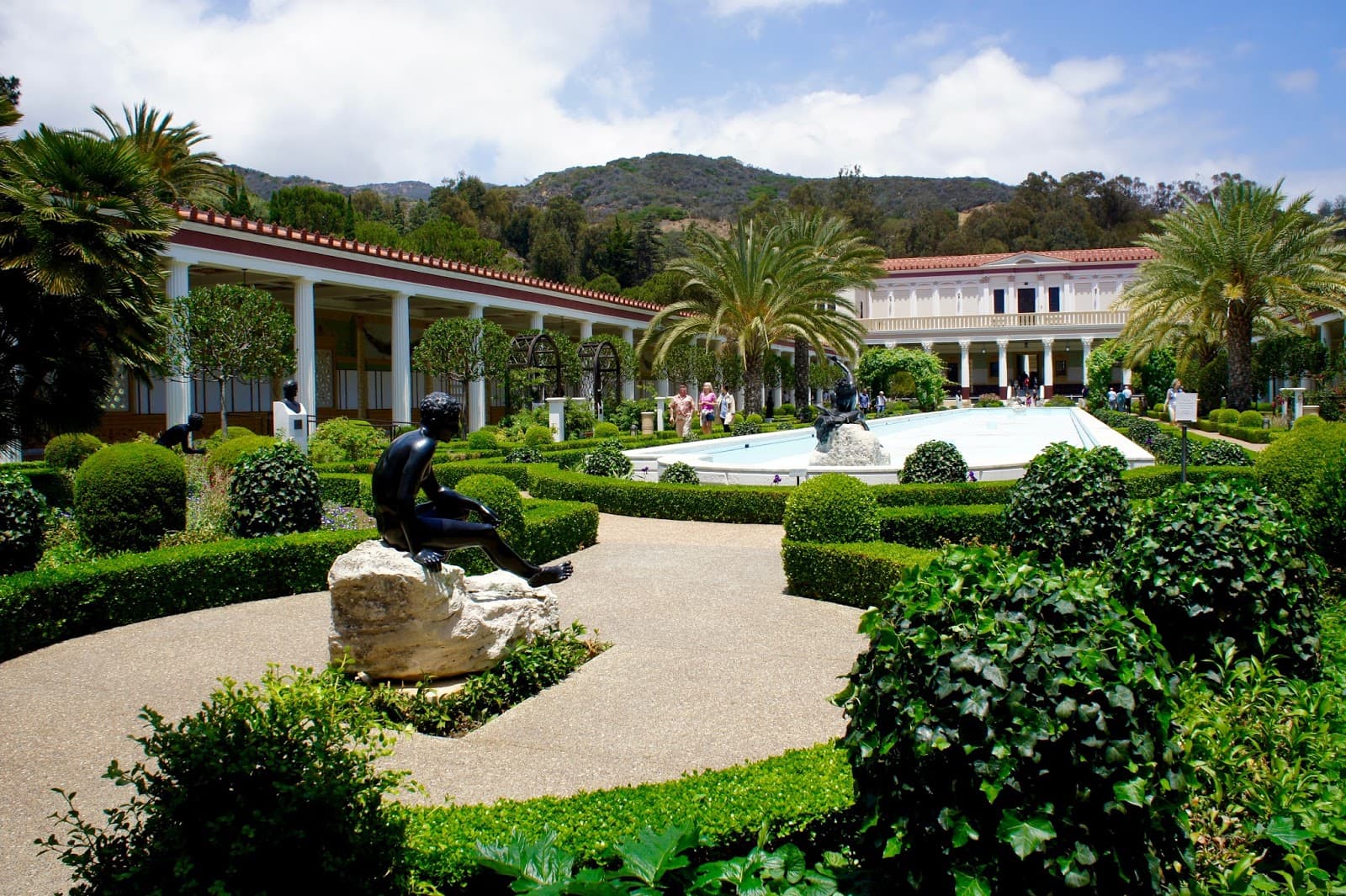
We took him to the Getty Villa in Malibu, inspired by the country home of Julius Ceasar’s father-in-law, which was excavated from the rubble of Mount Vesuvius.
We took the garden tour and discovered the Roman concepts of “otium” (leisure time) and “negotium” (business and daily affairs).
As we learned about these concepts, I realized that Otium was the most advanced concept of leisure I’ve ever seen. And it totally explains HOW the Romans were able to achieve so much, and how you can achieve so much more in your life and business, too, if you try this…

So what did the Romans do during these times of otium?
They were very clear that this wasn’t a time of sloth or “the selfish pursuit of pleasure”.
For them, otium was a time to put aside political or career gains and focus on the progress of their soul. It was time to devote to writing, philosophy, reading, meditation, contemplation, serious research, sharing thoughts and ideas, friendship, health, tranquility, the appreciation of nature, exercise, bathing (in grand Roman style), playing, and solitude. And they created beautiful villas and gardens devoted to these activities.
They believed in keeping an active mind during leisure, to vacate et videte or “be still and see”. Leisure was to the Romans, the ultimate form of meditation and contemplation. And I’d bet heavily that it was this holistic approach to leisure that helped make their civilization almost unstoppable.
As the Roman general Publius Cornelius Scipio Africanus said, he was never less idle than when he was at leisure, and never less lonely than when he was alone.
Here were the Romans who had conquered the world (creating the largest empire ever seen), the Gods (chiseling the most faithful renditions ever seen of man in marble and erecting gravity-defying basilicas in tribute to the divine), and Nature (taming water in their giant aqueducts)… and the idea of balancing otium & negotium was a central tenet.
Achievement requires rejuvenation, which fuels greater achievement, which requires more rejuvenation. That was the rhythm of their lives.
If you look at athletes and high performers, the science of full engagement and “heartmath”, they all talk the relationship between peak performance and rest.
In a culture based on doing and achieving, I find the concept of otium super inspiring. Leisure is something of a lost art…. so I listened intently as my dad encouraged me to take on hobbies that have nothing to do do with business, since my childhood hobbies of reading, writing and art have been absorbed by the business. It’s what I do everyday anyway… so why not trying something new? Something different? Perhaps something physical like hiking, pilates, or dance? Or something more contemplative like transcendental meditation? Something that would allow me to fully present and lose all sense of time and responsibility?
I suddenly realized that I now had “permission” (as if I needed it to begin with… lol) direct from the man himself — my dad and Leisure Suit Caesar — to take on some new hobbies.
Et tu entrepreneur? What do you do for leisure? And what does leisure do for you?